VALORANT design case study
A Redesign of the Practice Range into a Living Hub
A redesign of VALORANT's Practice Range as a shared lobby, re-entry tool and deeper training space.
How can the Practice Range grow with the player?
· 11 min read · 1 figure
1. Problem Statement
The Practice Range was introduced to onboard new players, provide a safe warm-up environment, and offer a space to test weapons and agents. While it continues to meet these baseline functions, its limited scope no longer keeps pace with VALORANT’s competitive depth or the expectations of its diverse player base.
New players often complete the tutorial but still feel unprepared for their first live matches. Intermediate players, who make up the majority of the community, cycle in and out of play and return to find new agents, maps, or meta shifts with no structured way to catch up. Competitive players use the Range only for simple warm-ups before moving to third-party trainers like Aim Lab and Kovaak’s to access richer drills and analytics.
As a result, the Range risks becoming a static space that fails to support VALORANT’s evolving ecosystem. Addressing this gap means creating tools that help every type of player learn, grow, and express mastery without needing to leave the game.
2. Defining Player Categories
To fully understand player needs, it is important to clarify who the players are. VALORANT’s community is diverse and fluid, and players often fall into broad archetypes that describe how they engage with the game.
3. Current Roles & Gaps
What The Range Does Well
- Player Onboarding
- Introduces core FPS mechanics.
- Gives new players a place to fail safely without letting teammates down.
- Sandbox Access
- Unlocks all agents and weapons so players can freely experiment
- Quick Accessibility
- Easy to enter and exit, making it a go-to for fast warm-ups between matches.
Gaps/Limitations
- No Performance Feedback
- No accuracy %, reaction time tracking, or personal bests.
- No milestones, challenges, or mastery loops to encourage return play.
- Lacks Agent/Utility Training
- Returning players lack structured re-entry tools when new updates regarding agents, guns or movement come out.
- Many Players Rely on Third-Party Tools
- Many players leave for Aim Lab/Kovaak’s to access richer drills and analytics, creating a gap in Riot’s own ecosystem.
4. Analysis
Any redesign of The Range must put player experience and learning first, aligning with Riot’s design values of hyper-serving core players and fostering a thriving, skill building ecosystem. The solution should be meaningful without becoming a distraction from the heart of VALORANT. It must address the needs of all archetypes. At the same time, it should remain a tool that prepares players for all the various games modes rather than replacing them.
New Players - Onboarding & Confidence
For new players, the Range is their first point of contact with core mechanics. It provides a safe space to experiment without the pressure of letting teammates down. However, once the tutorial is completed, there is little guidance or progression. Many enter live matches still unsure about fundamentals such as recoil control, ability usage, or map navigation. The Range should better bridge this gap.
A second challenge is that new players rarely begin VALORANT alone. Most start because a friend recommended the game, which means their first matches are often played in a group. Right now, the only way for a veteran to introduce a friend to agents and mechanics is through live matches and custom games, which is not a space not designed for structured onboarding. This leaves no dedicated way for friends to explore agents or practice together before stepping into live matches.
Intermediate Players - Retention
For intermediate players re-entry can feel overwhelming, and the Range does not currently support this need. The only way to test new agents and update is by queueing into Swiftplay or TDM, which puts returning players at a disadvantage and leads to frustration. Intermediate players need a way to catch up quickly and understand the new agent.
Competitive Players - Mastery
Competitive players primary goal is to improve performance and climb higher. What they need and often want is structured practice to sharpen specific aspects of their play. For this audience, The Range should serve as a environment that isolates skills and provides meaningful feedback loops, helping them translate practice directly into ranked or professional play.
Player Feedback and Pain Points
Player feedback consistently points to gaps in VALORANT’s Practice Range. After Patch 9.02 removed spike/defuse scenarios and timer-based bot drills, multiple online threads described the update as a “downgrade” and asked why Riot would remove “something so basic” without replacement. Players also repeatedly request the ability to spawn bots in custom maps to rehearse angles and executes, a feature long available in Counter Strike through community maps like Yprac and Aim Botz. The popularity of third-party trainers such as Aim Lab, which Riot officially partnered with for esports events, shows that many players currently leave VALORANT to practice core skills.
Having played over 4,000 hours of VALORANT since release, I have personally experienced these gaps. The lack of advanced, in-client training options has been a recurring frustration throughout my journey, and it is one echoed by the wider community.
5. Proposed Features
As of now, the Range is a separate, optional space. Most players only enter it for tutorials or quick warm-ups. This separation means the Range doesn’t play a role in daily player flow, and it misses an opportunity to naturally support onboarding, re-entry, and practice. Intermediate players especially would benefit from being able to test agents, maps, and mechanics seamlessly while or before queuing, rather than jumping into casual modes unprepared.
Proposal 1: The Range as a Living Lobby and Social Hub
Proposal: The Range becomes more than a warm-up space. Players in a lobby can move freely together, explore specialized areas, and interact before entering a match. This transforms waiting and downtime into a meaningful social experience.
Key Features:
Add-on Feature 1.5: Advanced and Customizable Gun Range
The goal of feature 1.5 is to extend the current Practice Range rather than replace it. The simple drills that new players already use remain unchanged. This add-on introduces an advanced option that lives alongside the existing Range, accessible to players who want more depth.
By structuring it this way, new players still get the streamlined onboarding experience, while intermediate and competitive players gain access to a modular, progression-oriented training space.
Key Features
- Customizable Scenarios: Players have more control bot behavior (movement, strafing, armor, spawn density, spawn location).
- Progression Tracking: Stats like accuracy, reaction time, and consistency are logged, with historical graphs to show improvement over sessions.
- Spatial Expansion: The Range adds new practice zones, such as:
- Close-Quarters Room for SMG and pistol duels
- Long-Range Alley for sniper and rifle precision
- Optional Daily/Weekly Challenges: Light challenges for all archetypes to encourage return play without making practice feel like a grind.
Player Journey Through the Redesign
Imagine a group of friends queueing for a Ranked match. Instead of sitting in a static lobby, they enter the redesigned Range together. While waiting for the match to start:
- They socialize in the hub and try out agents against each other in the Agent Testing Zones.
- They visit the store kiosk to preview and test the rotating skins before deciding on a purchase.
- Another player warms up in the advanced practice zone (Feature 1.5), using customizable drills to rehearse specific scenarios without leaving the group.
This journey shows how Proposal 1 and its Add-on Feature 1.5 work in tandem. The hub supports social interaction and exploration, while the advanced Range provides deeper training for players who want to sharpen their skills. Together, these elements turn downtime into a player-driven experience that adapts to different needs within the same shared space.
6. Impact & Considerations
Across all three archetypes, a common thread emerges: the Practice Range introduces fundamentals but does not evolve with the player. New players leave the tutorial still uncertain, intermediates lack tools to re-enter confidently after time away, and competitive players outgrow the static drills entirely.
The proposed solution is designed to close these gaps by reframing the Range not as an optional side activity, but as an integrated, evolving space. By making it both a living lobby and a social training ground, the Range can serve the needs of every archetype while staying aligned with Riot’s player-first philosophy. Cosmetic experimentation within this space could also increase profitability by turning purchases into a social ritual instead of a private click.
While the redesign offers clear benefits across all archetypes, it also introduces challenges that must be considered to ensure the Range remains accessible, sustainable, and aligned with Riot’s live-service values.
7. Rollout / Iteration Plan
Riot’s live service culture emphasizes phased development and structured feedback loops. Philip DeRosa notes in his Game Developer article “Tracking Player Feedback to Improve Game Design”, that feedback is most effective when it is gathered across multiple channels, organized into actionable themes, and treated as an iterative process rather than a one-time checkpoint. Communicating back to players about how their feedback shapes features is equally important, and DeRosa highlights this as critical for maintaining trust and credibility with the community.
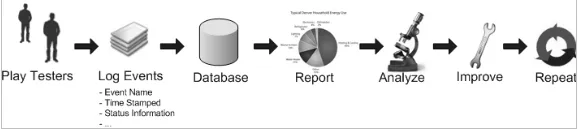
Based on DeRosa’s framework seen in Figure 1 the development progresses through phases of delivery, review, and iteration. Each stage is informed by telemetry, surveys, and community feedback before expanding further. Communicating back to players through patch notes and dev blogs keeps the process transparent and aligned with Riot’s player-first philosophy.
Iteration & Feedback Loops
Building on DeRosa’s iterative framework, the rollout plan for the Practice Range redesign integrates feedback loops throughout. The transitions below illustrate how each phase cycles through telemetry, surveys, and community sentiment before shaping the next stage.
8. Summary
The redesigned Practice Range transforms an underutilized warm-up space into a living hub that supports VALORANT’s full player journey. By anchoring the redesign in clear player pain points and layering features that serve new, intermediate, and competitive players alike, the proposal ensures that the Range grows alongside the community rather than being left behind. Framing the rollout around phased development and feedback loops keeps the solution true to Riot’s player-first philosophy, balancing ambition with iteration and transparency. Ultimately, this vision not only strengthens onboarding and re-engagement but also deepens social play and confidence in competitive queues, delivering long-term value to both players and Riot’s ecosystem.
References
The writing and figures are carried forward from the original 2025 VALORANT design portfolio. This wireframe changes their presentation, not the underlying proposal.